A small drop along the top lip can change how your smile reads in photographs and in person. Not fullness from gel, but a soft roll of the lip border that catches the light better and shows a hint more pink. If that sounds like what you want, you are thinking about a Botox lip flip, not filler. It is a subtle move, and when it is done well, it looks like you, just more relaxed and balanced.
I have treated hundreds of lips with both approaches and the most common surprise is this: patients who ask for “bigger” often want “better shape,” and that is where Botox can excel. You will not walk out with swollen volume. You will walk out with a top lip that rests less tightly against the teeth and turns outward a few millimeters. The effect is measured in angles and muscle tone, not milliliters.
What a Lip Flip Really Does
A lip flip uses tiny amounts of botulinum toxin type A to weaken the superficial fibers of the orbicularis oris muscle along the upper vermilion border. The goal is controlled relaxation. When the sphincter muscle relaxes, the lip stops curling inward and slightly everts, revealing more of the red lip. The result reads as a mild increase in lip show rather than a true increase in lip volume.
Think of it as repositioning, not plumping. Where fillers add structure and height by occupying space, Botox changes the balance of pull around the mouth. That is why the technique can also help with upper lip lines, sometimes called “barcode lines,” by softening excessive muscle activity that etches creases. It can even reduce a gummy smile by lowering the elevator pull on the upper lip, though that is a different injection pattern.
The amount of product is small. In my practice, an upper lip flip is usually 4 to 8 units, placed in four to six microinjections straddling the vermilion border, with optional dots for the depressor septi or nasalis if a gummy smile accompanies the concern. The effect builds over three to seven days and peaks around two weeks.
Who Benefits Most
The best candidates share two traits. First, they have adequate native lip tissue but poor lip show because of strong muscle tone. Second, they value subtlety. If you press your lips together and see the pink almost disappear, or your top lip curls under when you smile, you are a good candidate. Patients with thin lips at rest may still benefit, but expectations must be aligned, since the procedure will not create the structure that does not exist.
There are pattern differences across ages. botox clinics in West Columbia In the late 20s and 30s, a lip flip often serves as wrinkle prevention and shape enhancement for a lip that tucks when smiling. In the 40s and 50s, it can complement a small filler dose by increasing lip show while reducing upper lip lines. Past the 60s, when lip volume and skin elasticity decline together, a lip flip can soften pursing and improve lipstick bleed, but support from filler or energy-based tightening may be required to counter deeper skin folds.
A few dentofacial details matter. If you have a prominent overbite or retruded maxilla, your lip posture is already altered by skeletal position. The lip flip can still help, but the lift will be modest compared with someone whose anatomy is neutral. Smokers and heavy pursers will benefit from muscle relaxation for upper lip lines, but they are also the ones who most notice temporary changes in sipping and whistling.
Botox vs. Filler for Lips, and When to Combine
Filler changes silhouette; Botox changes movement. Treat them as different tools instead of rival options. If you want hydrated fullness, precise border definition, and projection of the Cupid’s bow, hyaluronic acid filler is the answer. If you want your top lip to stop hiding under stress and to look more relaxed when you smile, Botox is the move. Many patients do best with a small amount of both, spaced two to four weeks apart.
I often start a cautious first-timer with only Botox. The “trial” teaches how their smile behaves when the orbicularis oris eases. If they still want more presence at rest, 0.4 to 0.8 milliliters of a soft, low G’ filler can be added in the tubercles and border for structure. Conversely, if a patient comes in with filler but complains their lips roll under when they laugh, a lip flip can complete the look they paid for but never reached with gel alone.
If your concern sits lower in the face, such as marionette lines or deep laugh lines, Botox is not the tool for volume loss. It can help with muscle-driven shadows, but it does not replace collagen. For those areas, filler or collagen stimulators are more effective. Think of Botox as a way to refine movement patterns across the face: smoothing crow’s feet, lifting brows, softening frown lines, and, in this case, enhancing lip shape without surgery.
The Treatment, From Chair to Mirror
A lip flip visit is short. I cleanse with alcohol or chlorhexidine, apply a cold pack for 30 seconds, then map four to six superficial points along the upper border, sometimes two on the lower lip if there is asymmetry. The needle is fine, and the injections sit just under the skin surface. Most patients describe a two out of ten sting that lasts seconds. There is often a small blanching bump that settles within ten minutes.
Aftercare is light. Skip strenuous exercise for the rest of the day, avoid pressure on the area, and hold off on kissing or using a straw for a few hours. Bruising is uncommon but possible, usually pinpoint and easy to cover.
The change does not appear instantly. Around day three, the first shift appears in your smile. By day five to seven, the lip looks subtly more open at rest and less tucked during wide expression. At two weeks, we assess. If your muscle is strong or your goal is more visible eversion, a small top-up might be appropriate. The typical duration is six to ten weeks for lips, shorter than the three to four months we see in the forehead or crow’s feet because the mouth moves constantly.
How It Differs From “Lip Botox” Myths
People hear “Botox in lips” and imagine a frozen mouth. That comes from inaccurate placement or excessive dosing. The orbicularis oris is a ring; over-weakening it will make sipping and articulating labial sounds like “p” and “b” feel odd. The goal is not paralysis. It is a fractional relaxation of the superficial fibers at the border, preserving core function. When the plan respects anatomy and dose, you do not lose expression. You simply lose the habit of tucking.
A second myth is that a lip flip “lifts” the entire mid-face. It does not. If you want cheek lifting and firming, or improved jawline contour, you are in the realm of mid-face vectors and masseter management, not the lip flip. Botox has roles in jawline slimming, lifting brows, eye area rejuvenation, and smoothing crow’s feet. The lip flip belongs to a small, precise corner of perioral aesthetics.
Safety, Side Effects, and Red Flags
Expect temporary tightness or a feeling like your upper lip is “lazy” for a week. You may slosh water once or twice. Most adapt without noticing after three to five days. Bruising can happen. A droop at the mouth corner can occur if product spreads too low, especially in people with naturally downturned commissures. In my hands, the correction is to stay high and lateral, dose light, and avoid injecting into areas where the depressor anguli oris could be affected.
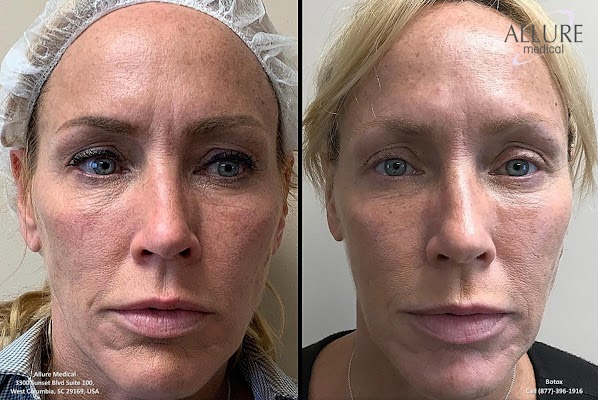
Rarely, patients report difficulty whistling or using a straw for a few weeks. Singing, woodwind playing, and competitive athletics that require forceful breathing through the mouth can be temporarily affected, which is why I ask musicians and athletes to plan around performances or meets.
If you experience asymmetric smile, difficulty pronouncing labial consonants that persists beyond two weeks, or any signs of infection like spreading redness and pain, contact your provider. Fortunately, lips metabolize toxin faster than the forehead, so missteps tend to fade within a month or two.
Matching the Lip Flip to Broader Facial Goals
A lip flip is often part of a total facial rejuvenation plan. Because it softens perioral tension, it pairs well with treating frown lines and forehead creases for upper face rejuvenation, and smoothing crow’s feet for eye wrinkle treatment. If your goal includes reducing under-eye puffiness or tired-looking eyes, Botox can help with wrinkles but not bags. For under-eye circles related to volume loss, consider filler or skin bio-stimulators instead.
Some patients pursue a botox for non-invasive facelift feel by sequencing treatments: lifting brows to open the eye, relaxing a gummy smile to balance the mouth, and reducing masseter bulk for jawline slimming. While no single session replaces surgery, thoughtful dosing across key muscles can shape expression, improve facial symmetry, and create a wrinkle-free smile that still moves like you. In patients with tension headaches or clenching, treating the masseters can bring muscle tension relief and improve the outline of a sagging jawline when hypertrophy is present.
For the lower face, be careful. Too much relaxation near the mouth in a patient with skin laxity can worsen deep skin folds or marionette lines by removing support. In those cases, I often treat lines above the lip with microdoses for upper lip lines, then address the folds with filler and skin toning technologies to maintain face tightening without dulling function.
Dosing Philosophy: Why Less Is Often More on the Lips
Injection strategy around the mouth rewards restraint. The orbicularis oris has layered fibers with different directions. Superficial dosing gives you border eversion. Deeper dosing risks functional change. I favor 0.5 to 1 unit per point in most women, sometimes as low as 0.25 units in petite frames or first-timers. Men and patients with strong pursing can require 1 to 1.5 units per point. Those numbers sound small, but around the lip, a quarter-unit can be the difference between “perfect” and “cannot sip from a water bottle.”
We also discuss lifestyle. If a patient teaches fitness classes and whistles cues, I aim lower. If they are preparing for a wedding with many candid laughs, we emphasize symmetry and smile behavior, sometimes favoring a microdose along the depressor septi nasi to reduce upper lip pull when smiling. If they are a brass musician, we often defer or plan during off-season, or steer toward filler for lip line smoothing rather than Botox.
The Role of Skin Quality Around the Lip
Movement is only part of the story. Skin elasticity and texture affect how the mouth looks and moves. If etched lines persist at rest, even when the muscle is quiet, those are skin changes from collagen loss and repeated folding. Microdoses of toxin help by reducing motion, but they do not rebuild dermis. For deep lines around the mouth or upper lip lines that remain after a flip, I often suggest low-viscosity filler in microthreads, fractional resurfacing, or microneedling radiofrequency. These improve skin smoothness and can lengthen the life of a Botox result by reducing the tug-of-war between skin and muscle.
Patients who want a youthful appearance also ask about neck and chest wrinkles. Botox can soften necklace lines and vertical neck bands in selected cases, supporting neck rejuvenation and neck contouring, but again, those are separate patterns with different doses and risks. The take-home: choose the right tool for the right layer, muscle versus skin versus volume.
How Long It Lasts and How to Maintain It
Plan on a refresh every 8 to 12 weeks if you love the effect. Some metabolize faster, especially athletes or those with very expressive faces. Over time, a small percentage of patients find their pursing habit weakens, and they can space out visits to three to four months. Others alternate treatments, pairing two lip flips with one small filler session per year to keep lip fullness enhancement steady without ever looking “done.”
Sun behavior, smoking, and skincare matter. Daily sunscreen and a bland barrier balm protect the lip border from chronic irritation that can deepen lines. Retinoids near the border must be used carefully to avoid dermatitis, but retinaldehyde or gentle peptides around the perioral skin can support skin restoration. Hydration helps, although it will not change muscle tone. The big lever is moving less in the wrinkle-forming patterns and supporting the skin that folds.
Who Should Skip or Postpone a Lip Flip
Not every mouth is a candidate on every day. If you already struggle to keep liquids from dribbling, have neuromuscular disorders that affect facial control, or are actively breastfeeding or pregnant, postpone. If you need precise articulation for upcoming performances or recordings, wait until after. If you are looking for dramatic volume, go straight to filler, or at least try filler first, then add a flip if your smile still tucks. If your main complaint is deep laugh lines, marionette lines, or chin wrinkles from dimpling, say so. Those can be addressed with targeted toxin for chin lifting or fillers, but a lip flip alone will not correct them.
Allergies to components are rare. Prior issues with botulinum toxin should be disclosed. If you have a history of cold sores, we can premedicate to reduce the risk of a flare from needle trauma.
What It Costs and What You Should Ask Before You Book
Costs vary by region, but because doses are small, a lip flip generally runs lower than full upper-face treatment. Prices I see range from the cost of 4 to 10 units, which, depending on practice, may be billed per unit or per area. What matters more than cost is the injector’s perioral experience.
Ask to see smile photos, not just still lips at rest. The point of a lip flip is expression. A good portfolio shows before and afters at rest and in a wide smile. Ask where they place points, how many units they prefer for a first-timer, and how they handle speech or straw difficulties if they occur. Discuss whether they combine with filler and in what order. If your provider treats a lot of upper face but little perioral work, consider someone who does mouth work weekly.
Where Botox Fits Among Other Non-surgical Lip Enhancements
There are other ways to make lips look better without surgery. Lip conditioning with hyaluronic acid serums, energy-based devices for skin toning, and platelet rich fibrin injections for skin quality can all help the frame around the lip. None of these will change muscle behavior. Conversely, Botox will not hydrate or reconstruct dermal scaffolding. This is why the best plans often combine modalities for improved skin appearance and smoother jawline or mouth area without chasing a single tool past its limits.
In a broader non-surgical plan, Botox can also support face sculpting by adjusting balance across muscles that pull up and down. Lifting brows, smoothing forehead lines, reducing crow’s feet, and even addressing a sagging jawline from masseter hypertrophy can make a face look more lifted and sculpted. These background changes make a lip flip read as part of a cohesive, youthful skin restoration rather than a lone tweak.
A Practical Path: How to Trial, Tweak, and Keep It Natural
If you are ready to try, plan a conservative first pass. Photos in neutral light at rest and in a full, toothy smile give a baseline. After treatment, avoid straws and heavy lip pressure for the first day. Check your smile in a mirror on day 5 and day 10. If you notice liquid escaping when you sip, give it a week; most adapt. At two weeks, meet your injector to review symmetry, smile behavior, and whether you want a small top-up.
For patients who want a step-by-step approach, this is one clear sequence that works well without overcomplicating care:
- Start with a conservative lip flip of 4 to 6 units placed along the upper border, then reassess at two weeks for function and symmetry. If more show is desired and function is normal, add 1 to 2 units in a top-up or consider 0.4 to 0.8 milliliters of soft filler for structure after two to four weeks. Maintain every 8 to 12 weeks for Botox and every 6 to 12 months for filler, adjusting with photographs and feedback rather than a fixed schedule.
This small plan respects both movement and structure, and it keeps the process iterative so you can stop when you reach “right for me.”
Real-world Nuances From the Chair
Patients often arrive with screenshots of dramatic filler lips and leave most satisfied with restraint. One example stands out: a patient in her mid-30s who hated her gummy smile more than her lip size. We placed 2 units on each side of the levator labii superioris alaeque nasi and 1 unit at the Cupid’s bow peaks, plus 1 unit at each lateral vermilion border. At day 10, her gum show dropped by about 2 millimeters, and her top lip revealed more pink on smile, no filler needed. She later added a tiny 0.3 milliliter filler touch for definition. The net result was balance, not bulk.
Another case, a busy hospitality manager, wanted fuller lips but used a straw all day on the job. We split the plan: microdose Botox for upper lip lines only, avoiding a full flip, then soft filler for lip fullness enhancement. She kept straw function and gained contour. The point is not that a lip flip is always right; it is that you need the right tool for your specific work and lifestyle.
Where Keywords Meet Real Indications
You may see Botox marketed for wrinkle prevention, forehead lines smoothing, or smoothing crow’s feet. Those are accurate when dosing and anatomy match. In the lip zone, the accurate phrases are lip line smoothing, enhancing lip shape, and lip enhancement without surgery. If someone promises “volume restoration” with Botox in the lips, be cautious. Volume belongs to filler. Movement belongs to Botox.
For patients in their 30s seeking wrinkle removal in 30s as prevention, small, precise dosing can stop habits from etching lines. In the 40s and 50s, it shifts toward softening established patterns. With tired-looking eyes, treat around the crow’s feet and frown lines, not the lips, if the concern sits up top. With a sagging neck treatment request, use Botox carefully in platysmal bands or choose other modalities. Staying precise about indications protects results.
The Bottom Line
A Botox lip flip is a quiet nudge, botox SC not a megaphone. It reveals the lip you already have by shifting muscle tone so it sits in a more flattering position. If your goal is a subtle, rested smile, more pink show without extra bulk, and fewer upper lip lines from overactive pursing, it is a good choice. If your goal is bigger lips that hold shape at rest, you likely need filler, with or without a flip.
Good outcomes come from accurate assessment, conservative dosing, and honest discussion about function. Your lips move all day. Any change must respect that. Done well, the lip flip is the small adjustment that makes photos feel kinder, lipstick sit better, and your smile look like you slept well. That is the promise of botox for lip enhancement without surgery, and for the right patient, it delivers exactly that.